
Career Guide: ICU Nurse
Here’s what you need to know.
Toggle Navigation
Our Enrollment Counselors are here to answer your questions and walk you through the enrollment process.
Career Overview: ICU Nurse
Behind every intensive care unit (ICU) is a team of healthcare professionals working to stabilize patients during some of medicine’s most critical moments. ICU nurses are at the center of that effort, providing around-the-clock monitoring, administering treatments, and helping patients and families navigate complex medical situations.
For registered nurses (RNs) seeking a fast-paced and highly specialized nursing career, intensive care nursing offers opportunities to make a meaningful difference while working alongside physicians and other healthcare professionals. Learn more about what an ICU nurse does, education pathways and how to become one.
What Is an ICU Nurse?
An ICU nurse, also known as an intensive care nurse, is a RN who cares for patients with severe illnesses, injuries or medical conditions that require advanced treatment and continuous observation. These patients often need a higher level of care than can be provided in a standard hospital unit.
These healthcare professionals are often considered a type of critical care nurse. While critical care nurses may work across a variety of high-acuity healthcare settings, ICU nurses primarily work within an intensive care unit, where patients receive specialized treatment and around-the-clock monitoring.
Patients in the ICU may be recovering from major surgery, experiencing organ failure, receiving treatment for serious infections or recovering from traumatic injuries. In addition to caring for critically ill patients, ICU nurses support patients and family members through some of healthcare’s most challenging and uncertain situations.
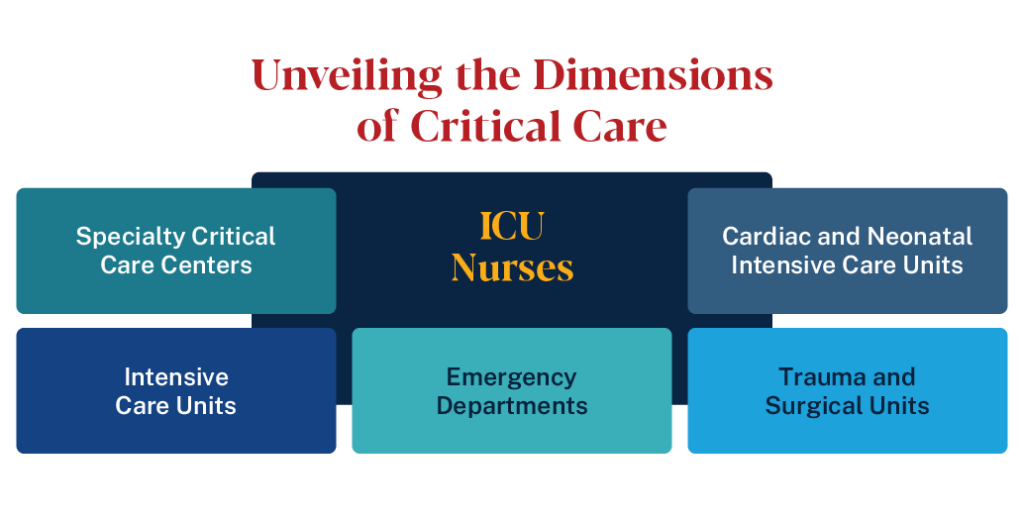
ICU nurses work in hospitals in a variety of intensive care units – such as cardiac, surgical and neonatal – as well as other specialty critical care settings.
What Does an ICU Nurse Do?
ICU nurses provide patient care for individuals whose conditions require close observation and specialized medical treatment. Because these patients can experience rapid changes in their condition, ICU nurses play an important role in helping healthcare teams identify concerns early and respond quickly when intervention is needed.
Core Duties and Responsibilities
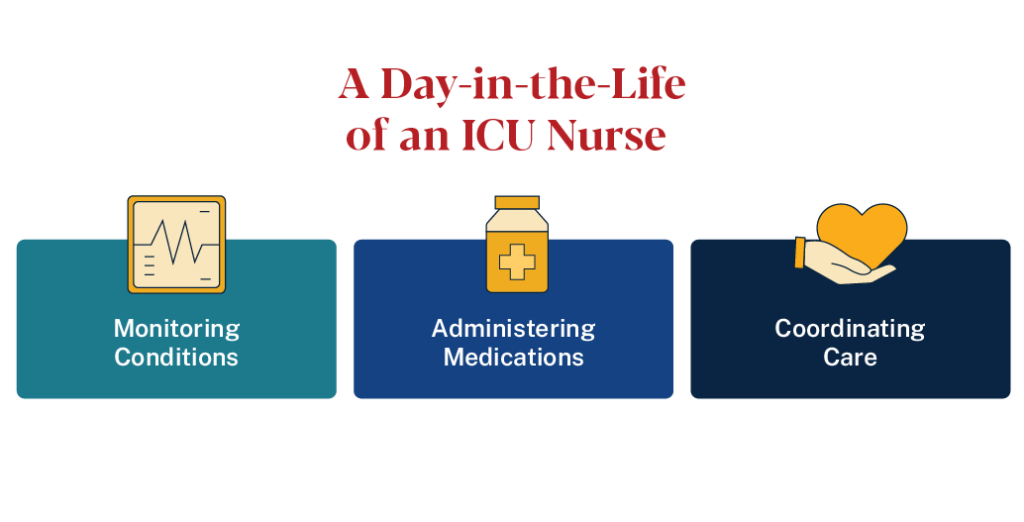
ICU nurses balance direct patient care with ongoing assessment, treatment coordination and communication with healthcare teams. Common responsibilities include:
- Monitoring critically ill patients and vital signs
- Administering medications and specialized treatments
- Operating life support and critical care equipment
- Collaborating with physicians and healthcare teams
- Educating patients and family members about care plans
- Responding to medical emergencies and rapid patient changes
- Documenting patient progress and treatment outcomes
Work Environments
Although many ICU nurses work in hospitals, opportunities exist across a variety of critical care settings. Different environments may expose nurses to unique patient populations and specialized treatments. Common work settings include:
- Intensive care units
- Emergency departments
- Trauma and surgical units
- Burn units
- Cardiac and neonatal intensive care units
- Specialty critical care centers
- Transport teams as flight nurses
Skills & Traits That Make a Successful ICU Nurse
Working in intensive care requires more than clinical knowledge. ICU nurses often care for patients whose conditions can change rapidly, requiring quick decisions, clear communication and the ability to remain focused under pressure. Success involves a combination of technical expertise with strong interpersonal skills to support both patients and their families during difficult situations.
Essential Soft Skills
Strong communication skills help ICU nurses coordinate care with physicians, respiratory therapists and other healthcare professionals while keeping patients and family members informed about treatment plans and progress. Because critical care often involves uncertainty and high-stress situations, clear and compassionate communication can help build trust and reduce anxiety.
Emotional resilience and adaptability are equally important. ICU nurses regularly work with critically ill or injured patients and must remain composed when priorities shift unexpectedly. The ability to adapt while maintaining a high standard of patient care is essential in fast-paced healthcare environments.
Critical thinking and problem-solving skills help nurses recognize subtle changes in a patient’s condition and respond appropriately. Attention to detail, strong time management and empathy further support effective care, allowing nurses to balance complex clinical responsibilities while treating patients with compassion and respect.
Important Technical Skills
ICU nurses rely on specialized clinical knowledge to care for patients with complex medical needs. This includes understanding intensive care nursing procedures, administering medications, performing patient assessments and using advanced monitoring systems to track patient conditions.
Many ICU patients require specialized equipment such as ventilators, cardiac monitors and other life support technologies. As a result, ICU nurses must be comfortable operating critical care equipment and interpreting the information it provides. They also need strong clinical documentation skills to ensure healthcare teams have accurate and up-to-date patient information.
How These Skills Apply on the Job
These skills come together every day. An ICU nurse may need to recognize a sudden change in a patient’s condition, communicate concerns to the healthcare team and help implement a treatment plan within minutes. At the same time, they may provide reassurance to family members navigating a stressful medical situation. By combining clinical expertise with compassion and sound judgment, ICU nurses help support patient stabilization, coordinate effective care and improve outcomes for critically ill patients.
ICU Nurse Education Requirements
If you’re currently researching how to become an ICU nurse, you’ll want to start as an RN before gaining experience in critical care settings. While there is no single path into intensive care nursing, most employers look for a combination of nursing education, licensure and hands-on clinical experience.
Minimum Education Requirements
The first step toward an ICU nursing career is completing an accredited nursing program. Aspiring nurses can earn either an Associate Degree in Nursing (ADN) or a Bachelor of Science in Nursing (BSN), both of which can prepare graduates to pursue registered nurse licensure. After completing a nursing program, candidates must pass the NCLEX-RN examination and obtain licensure to practice as a registered nurse.
Preferred Education Pathways
Although both ADN and BSN graduates can become RNs, many healthcare organizations prefer BSN-prepared nurses for specialized roles in intensive care settings. A BSN program often provides additional coursework in leadership, evidence-based practice and patient care that can support long-term career growth.
Clinical experience is also an important part of ICU nurse requirements. Many nurses gain experience in medical-surgical units, emergency departments or other acute care settings before transitioning into intensive care.
Certifications and Training Options
As ICU nurses develop their careers, many pursue additional certifications to demonstrate specialized knowledge and commitment to critical care patient care. One of the most recognized credentials is the Critical Care Registered Nurse (CCRN) certification, which is designed for experienced nurses who provide direct care to critically ill patients.
Other common certifications include Basic Life Support (BLS) and Advanced Cardiovascular Life Support (ACLS). Continuing education in critical care, trauma response and emerging healthcare technologies can also help ICU nurses stay current with best practices and advances in patient care.
How to Become an ICU Nurse
Becoming an ICU nurse typically involves building a strong foundation in nursing education, gaining hands-on clinical experience and developing the skills needed to care for critically ill patients. While career paths vary, you’ll likely follow a similar progression from nursing school to specialized critical care practice.
- Complete a Nursing Program
The first step is earning a nursing degree through either an Associate Degree in Nursing (ADN) or Bachelor of Science in Nursing (BSN) program. These programs provide the clinical knowledge and patient care experience needed to begin a nursing career.
- Obtain RN Licensure
After graduating from a nursing program, you must pass the NCLEX-RN examination and obtain state licensure to practice as a registered nurse.
- Gain Clinical Nursing Experience
Most nurses do not begin their careers in the ICU immediately after graduation. Instead, you’ll gain experience in hospitals, patient care units or emergency departments where you’ll develop foundational clinical skills and confidence.
This experience helps you strengthen your assessment abilities, improve clinical judgment and become comfortable working in fast-paced healthcare environments first. - Transition Into Intensive Care Nursing
Once you’ve gained relevant clinical experience, you can pursue opportunities in intensive care units and other critical care settings. Working in the ICU allows you to develop specialized knowledge related to advanced monitoring, critical care procedures and the treatment of patients with serious medical conditions.
Many ICU nurses also pursue certifications such as the CCRN credential to demonstrate expertise in critical care nursing and support continued professional growth. - Optional: Advance With Graduate Education
You can choose to continue your education by pursuing a master’s degree. In fact, graduate education can support career advancement into leadership, education, administration or advanced nursing practice roles. Programs such as the RN to MSN and BSN to MSN pathways offered at American College of Education (ACE) can help you build leadership skills while expanding your healthcare knowledge and career opportunities.
Day-in-the-Life & Real-World Scenarios
A Typical Workday
No two days in the ICU are exactly alike, but most shifts begin with reviewing patient updates, treatment plans and recent changes in condition. Throughout the day, ICU nurses assess patients, administer medications and coordinate care with physicians, respiratory therapists and other healthcare professionals.
Because patient conditions can change quickly, priorities often change throughout a shift. An ICU nurse may spend part of the day monitoring a patient recovering from surgery, then suddenly assist with an emergency intervention for another patient experiencing complications. The ability to adapt while maintaining close attention to detail is a key part of intensive care nursing.
Real-World Examples
Consider a patient experiencing respiratory failure who requires mechanical ventilation. An ICU nurse may closely monitor oxygen levels, track changes in vital signs and work with the healthcare team to adjust treatment as the patient’s condition evolves.
At the same time, an ICU nurse may help explain treatment plans, answer questions about a patient’s progress and provide reassurance during periods of uncertainty. While physicians often lead medical decision-making, ICU nurses are frequently the healthcare professionals families interact with most throughout a patient’s stay.
What Success Looks Like in the Role
Success in ICU nursing is often measured through a combination of clinical outcomes and patient-centered care. Effective ICU nurses help identify potential complications early, contribute to patient stabilization and support coordinated care across healthcare teams.
Equally important is the ability to communicate clearly, remain calm under pressure and provide compassionate support to patients and families. By combining technical expertise with empathy, ICU nurses can make a meaningful difference during some of the most challenging moments in a patient’s healthcare journey.
ICU Nurse Salary & Job Outlook
ICU nurse salaries can vary due to a variety of factors: location, type of hospital, type of shifts and overtime pay. Certifications and level of education attained can also affect salary. Demand for RNs is projected to remain high for the foreseeable future.


FAQs
What is the difference between an ICU nurse and an ER nurse?
While both specialties care for patients with serious medical needs, ER nurses typically focus on evaluating and stabilizing patients when they first arrive for treatment. ICU nurses, however, care for patients who require ongoing monitoring and advanced treatment after admission to an intensive care unit. Patients in the ICU often remain under observation for longer periods and may require specialized equipment or life support.
Do ICU nurses need critical care certifications?
Certification is not always required, but many ICU nurses pursue credentials such as CCRN certification as they gain experience. Certifications can demonstrate specialized knowledge and may support professional development and career advancement.
Can ICU nurses specialize in certain types of critical care?
Yes. ICU nurses may specialize in areas such as cardiac care, neonatal care, surgical intensive care, trauma care or other specialties. This often depends on a nurse's clinical interests, experience and employer opportunities.
Is ICU nursing considered a high-stress specialty?
ICU nursing is often considered one of the more demanding nursing specialties because they care for critically ill patients whose conditions can change rapidly. However, many find the role rewarding because it allows them to make a meaningful impact while working closely with patients, families and healthcare teams.
Build a Career at the Center of Critical Care
Whether you're preparing to become an RN or looking to advance your nursing career, continued education can help open doors to specialized roles in critical care and healthcare leadership.
ACE offers affordable nursing degree programs designed for working professionals. Pathways create opportunities for you to continue building your knowledge and credentials while balancing work and personal responsibilities. Get started today.