
Career Guide: First-Grade Teacher
Here’s what you need to know.
Toggle Navigation
Our Enrollment Counselors are here to answer your questions and walk you through the enrollment process.
First-Grade Teacher Career Overview
Becoming a first-grade teacher means stepping into a classroom where big discoveries happen every day. First grade is often the year students learn to read on their own, solve their first math problems independently and see themselves as capable learners. It is a time when curiosity grows quickly, confidence begins to take root, and children start building the academic and social skills that shape their future in school.
As a teacher, you get to guide students through stories that open new worlds, encourage them to work together and express their ideas, and foster a love for learning that can last a lifetime. If this sounds like your passion, American College of Education (ACE) is ready to take on the journey with you. Learn more about what a first-grade teacher does, how to become a first-grade teacher, the skills you will need, and what to expect in terms of first-grade teacher salary and career outlook.
What Does a First-Grade Teacher Do?
A first-grade teacher plays a key role in shaping how children see school and themselves as learners. At this age, students are developing academic skills alongside social and emotional abilities, so the classroom setting must support both learning and personal growth. In a typical first-grade classroom, teachers focus on several core responsibilities.
- Teaching foundational academic skills: First graders begin to build strong literacy and math skills. Teachers lead phonics instruction, early reading comprehension, writing practice, number sense, addition, subtraction and introductory problem solving. They also introduce science and social studies concepts in age-appropriate ways. When people ask, “What do you learn in first grade?” the answer often includes reading fluency, basic math operations, and understanding the world through simple science and social studies lessons.
- Planning lessons and creating lesson plans: Lesson planning is a daily part of the job. A first-grade teacher designs engaging activities, selects materials and adapts instruction to meet different learning needs. These lesson plans help structure the day and ensure students are meeting learning goals.
- Managing classroom behavior: Classroom management is especially important at this age. Students are learning how to follow routines, work independently and cooperate with classmates. Teachers establish clear expectations and support positive behavior in a structured classroom setting.
- Assessing student progress: Teachers regularly check how students are progressing in reading, math and other subjects. This includes informal observations, quizzes, reading assessments and report cards. These assessments help teachers adjust instruction and provide support when needed.
- Communicating with parents and caregivers: First-grade teachers maintain regular communication with families. They share updates about student progress, discuss challenges and offer suggestions for learning at home. Strong communication builds trust and supports student success.
Compared to upper elementary grades, a first-grade teacher focuses more on foundational skills, routines, and early academic habits. This year sets the stage for the rest of a child’s education, which makes the role both impactful and demanding.
How to Become a First-Grade Teacher
If you’re currently considering how to become a first-grade teacher, the path typically includes education, hands-on training and state licensure. While exact requirements vary by state, most public-school teachers follow a similar process. Before reviewing the following steps, it helps to understand that teaching is a licensed profession, which means preparation often includes both coursework and supervised classroom experience.
| If you don’t have a bachelor’s degree… | If you have a non-education bachelor’s degree… |
|---|---|
| Earn a bachelor’s degree that leads to initial certification or a bachelor’s in another field in tandem with an alternative certification program. | Complete an alternative certification program. OR Complete a Certificate in Transition to Teaching in Elementary Education. |
| Gain hands-on experience through student teaching. | |
| Obtain teacher certification and/or licensure according to your state and school district’s requirements. | Optional: Pursue an initial-licensure master’s degree, such as an M.A. in Elementary Teaching. |
| Obtain teacher certification and/or licensure according to your state and school district’s requirements. | |
| Optional: Enhance your qualifications and expertise with a master’s degree in education. |
Please note that completion of a degree or certificate alone does not guarantee licensure. Candidates must meet all state-specific requirements, which may include exams, background checks and supervised teaching.
Essential Skills for First-Grade Teachers
Teaching six and seven-year-olds requires a mix of instructional knowledge and strong interpersonal skills. In addition to understanding the curriculum, teachers must support students who are still learning how to function in a school environment. Some of the most important teacher skills for this role include:
- Patience and resilience: Young learners need time and repetition to master new concepts. First-grade teachers stay calm, supportive and encouraging, even on challenging days.
- Exceptional communication skills: Teachers explain ideas in ways children can understand and communicate clearly with parents and school staff. Strong communication is central to effective classroom management and family engagement.
- Organization and lesson planning: Managing a classroom full of young students requires strong planning and routines. Teachers organize materials, structure the school day and adapt lesson plans when needed.
- Creativity and adaptability: Children learn in different ways. A successful first-grade teacher uses games, stories, hands-on activities and visual tools to keep students engaged.
- Understanding child development: Knowing how children grow socially, emotionally and academically helps teachers respond to student needs and set realistic expectations.
Related Degree Programs
Because first-grade teaching is built on strong instructional and leadership skills, several degree pathways can support your growth. At ACE, programs that align with this career path include:
- B.A. in Education Studies
- Certificate in Transition to Teaching in Elementary Education
- M.A. in Elementary Teaching
- M.Ed. in Elementary Education
First-Grade Teacher Salary & Job Outlook
The Bureau of Labor Statistics categorizes first-grade teachers in the occupational classification for kindergarten and elementary school teachers. As of May 2023, the median annual salary for elementary school teachers was $62,310, though earnings vary based on education level, experience, location and other factors. Teachers with advanced degrees or specialized training may earn higher salaries over time.

Median annual pay: $62,310*
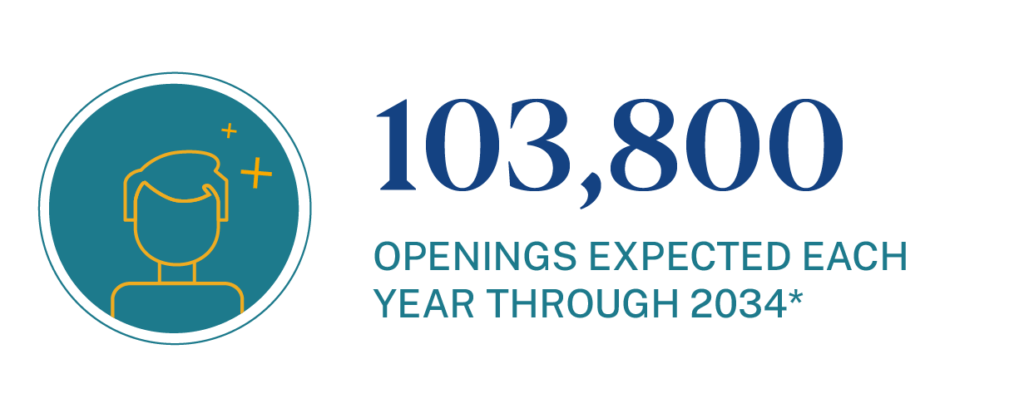
Projected growth: 103,800 openings expected each year through 2034*
FAQs
How long does it take to become a first-grade teacher?
Most people spend about four years earning a bachelor’s degree, plus time for student teaching and licensure exams. Alternative pathways may shorten or adjust this timeline.
Do you need a master’s degree to teach first grade?
A master’s degree is not always required to begin teaching, but it can support career advancement and higher pay in some districts.
Can you teach first grade without a teaching license?
Public school teachers typically must hold state licensure. Private schools may have different requirements, but certification is strongly preferred.
Sources
*Bureau of Labor Statistics. BLS classifies first-grade teachers under kindergarten and elementary school teachers, except special education. Accessed Jan. 29, 2026.
Build Your Career Today and Shape Young Minds Tomorrow
Help build confidence, spark curiosity and create a classroom where students feel supported and capable. With flexible online programs designed for working adults, ACE can support you as you prepare for a career that makes a lasting difference in the lives of young students.