
Career Guide: Brand Strategist
Here’s what you need to know.
Toggle Navigation
Our Enrollment Counselors are here to answer your questions and walk you through the enrollment process.
Brand Strategist Career Overview
Think of a brand you’d instantly recognize when out shopping. There’s a big chance this brand feels consistent, memorable and easy to connect with across social media, ads and websites. Would you believe the immediate bond you have with this brand is by design? Behind the experiences that stand out for you is a strategy and a professional who understands how to shape perception, tell a story and connect with an audience in a meaningful way.
A brand strategist plays a key role in how companies present themselves to the world. From developing brand strategies to refining messaging and positioning, this career blends creativity with data-driven thinking. It is a path that allows professionals to explore market trends, work with creative teams and influence how businesses grow in a competitive marketplace.
Are you interested in solving real business challenges, shaping brand identity and contributing to campaigns that reach audiences across digital marketing channels? Learn more about what a brand strategist does, how to enter the field and what to expect as you build your career.
What Is a Brand Strategist?
A brand strategist is a professional who helps shape how a company is perceived by its audience. What does a brand strategist do? The answer generally sits at the intersection of creativity and strategy. At their core, brand strategists develop brand blueprints that define a company’s identity, voice and direction in a marketplace.
The brand strategist role is also about clarity. Businesses often have great products or services but struggle to communicate what makes them different. A brand strategist works to refine that message, ensuring it connects with the right audience at the right time. This includes defining brand positioning, aligning messaging with business goals and making sure every touchpoint reflects a consistent brand identity.
To do this well, brand strategists rely heavily on consumer insights and market trends. They study how people think, what they respond to and how behavior shifts across different platforms.
Collaboration is also a must. Brand strategists work closely with marketing teams, leadership and creative professionals to bring ideas to life. If you are curious about related roles in this space, explore this digital marketer career guide and see how these responsibilities often overlap.
What Does a Brand Strategist Do?
A brand strategist job description can vary depending on the organization, but the overall goal stays the same: to build a clear, compelling brand that resonates with its audience. In many cases, this means balancing big-picture thinking with day-to-day execution.
On any given project, a brand strategist may move between research, planning and collaboration. One moment they might be reviewing data on consumer behavior, and the next they could be working with a creative team to shape a campaign’s tone and message.
Core Duties and Responsibilities
- Developing brand strategies: This involves creating a clear plan that outlines how a brand should present itself across different channels. For example, a company entering a new market may need to adjust its messaging to better connect with a new audience.
- Conducting market research: Brand strategists analyze consumer behavior and market trends to understand what influences buying decisions and how audiences interact with brands.
- Defining brand positioning: They focus on identifying what sets a brand apart and how it should be perceived compared to competitors.
- Collaborating with creative teams: Strategists often work with designers, writers and marketers to ensure campaigns reflect the intended brand message.
- Monitoring brand performance: Using data from digital marketing and social media, they track how well strategies are performing and adjust when needed.
- Managing brand architecture: This includes organizing how different products or services fit under one brand and ensuring consistency across all messaging.
- Supporting marketing strategies: Brand strategists contribute to product launches, campaigns and long-term branding efforts that drive engagement.
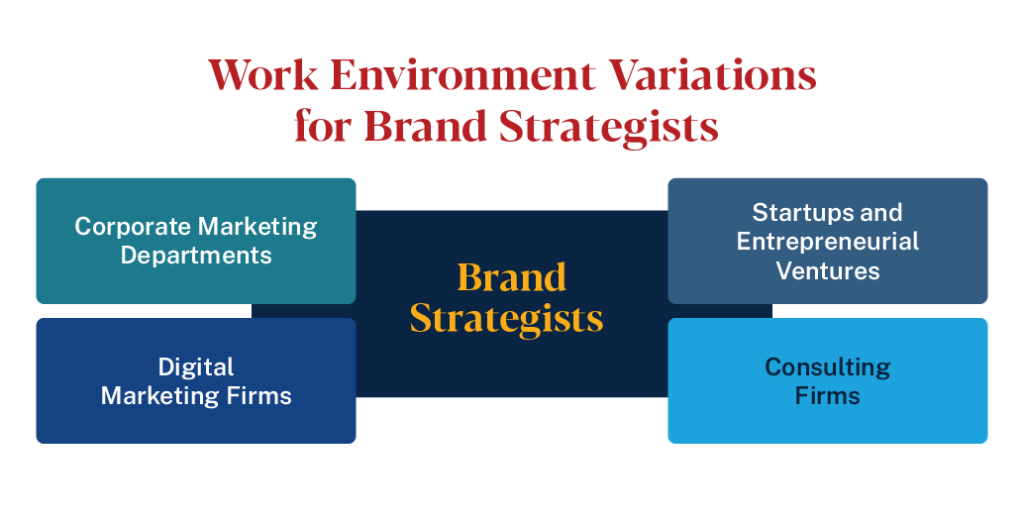
Work Environment Variations
- Marketing and advertising agencies: Often fast-paced, with multiple clients and projects happening at once
- Corporate marketing departments: Focused on building and maintaining a single brand over time
- Digital marketing firms: Emphasize online presence, social media and data-driven campaigns
- Startups and entrepreneurial ventures: Require flexibility, with strategists often wearing multiple hats
- Consulting firms: Provide strategic guidance to a range of clients across different industries
Skills & Traits That Make a Successful Brand Strategist
Becoming a successful brand strategist requires a balance of creativity and analytical thinking. The role demands both the ability to generate ideas and the discipline to test and refine them based on real data. Strong skills help brand strategists communicate ideas clearly and collaborate effectively with others. They also often determine how well a strategy is understood and executed.
Essential Soft Skills
- Creative thinking: The ability to develop fresh ideas that help a brand stand out in a competitive market
- Communication and storytelling: Crafting a clear and engaging brand message that resonates with different audiences
- Analytical thinking: Interpreting data and turning it into actionable insights
- Collaboration: Working effectively with a creative team and other stakeholders
- Adaptability: Responding to changes in market trends and consumer behavior
Important Technical Skills
- Market research and data analysis: Understanding how to gather and interpret data related to consumer insights
- Consumer behavior knowledge: Recognizing patterns in how people interact with brands
- Digital marketing expertise: Using social media and online platforms to reach target audiences
- Brand management: Maintaining consistency in messaging and brand positioning
- Analytics tools: Measuring performance and refining strategies based on results
How These Skills Apply on the Job
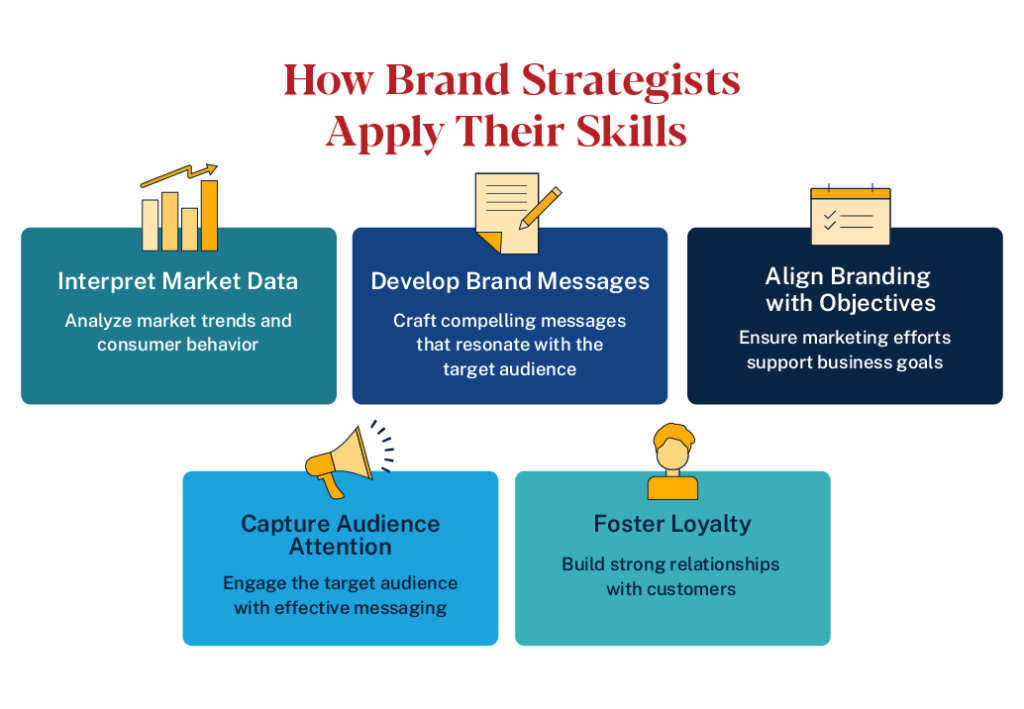
These skills come together in practical ways throughout a brand strategist’s workday. They may use data to identify a shift in consumer behavior, then collaborate with a creative team to adjust messaging accordingly. Over time, this ability to connect insights with action is what allows brand strategists to create campaigns that feel relevant, consistent and effective.
Brand Strategist Education Requirements
Are you wondering how you can become a brand strategist? Education is often the starting point. While there is no single path into the field, most professionals begin with a strong foundation in business, marketing or communications.
Minimum Education Requirements
A bachelor’s degree is typically required for entry-level roles in branding and marketing. Programs in business or marketing help students understand the fundamentals of brand management, consumer behavior and marketing strategies.
If you are considering this path, a Bachelor of Science in Business Administration & Leadership can provide a strong foundation for developing brand strategies and working in the broader field of branding and marketing.
Preferred Education Pathways
As professionals gain experience, many choose to deepen their knowledge through additional education options. Advanced degrees in marketing, advertising or business administration can help refine strategic thinking and leadership skills. For instance, an MBA can offer valuable insight into business operations, brand positioning and long-term strategy.
Certifications and Training Options
In addition to formal education, ongoing learning is important in this field. Brand strategists often build their skills through:
- Digital marketing certifications
- Branding and marketing strategy courses
- Training in analytics and consumer insights
How to Become a Brand Strategist
Breaking into brand strategy is a process that builds over time. Most professionals start in related roles and gradually move into more strategic positions as they gain experience. A step-by-step approach can potentially look like this:
- Earn a Relevant Degree
Start with a degree in marketing, business or communications. These programs introduce key concepts like consumer behavior, brand management and marketing strategies, which are essential for understanding how brands connect with audiences.
As you move through your coursework, look for opportunities to work on real projects or case studies. These experiences can help you begin thinking like a strategist early on, rather than just learning theory. - Gain Experience in Marketing or Branding
Entry-level roles in marketing, advertising or social media are often the first step into the field. These positions allow you to see how campaigns are developed, brand messaging is executed and teams collaborate to reach business goals.
For example, you might help manage social media content, assist with campaign planning or support market research efforts. Over time, these hands-on experiences help you understand what works, what doesn’t and how brands evolve. - Build Strategic and Analytical Skills
As you gain experience, begin shifting your focus from execution to strategy. This means learning how to interpret data, identify market trends and translate consumer insights into meaningful decisions.
In practice, this could involve analyzing engagement metrics to understand audience behavior or helping refine messaging based on campaign performance. Developing this mindset is what separates tactical roles from strategic ones. - Advance Into Brand Strategy Roles
With a few years of experience, you can begin transitioning into roles that focus more heavily on strategy, such as brand strategist or brand manager. At this stage, your responsibilities may include leading branding initiatives, guiding campaigns and helping shape long-term brand direction.
This is where your ability to connect data, creativity and business goals becomes especially valuable. Organizations rely on strategists to bring clarity and consistency to their brand efforts. - Optional: Advance With Graduate Education
Some professionals choose to pursue an MBA or a related degree to expand their knowledge and prepare for leadership roles in brand management and strategy. It can also open the door to opportunities that involve overseeing teams, managing complex projects and influencing decisions at a higher level.
Day-in-the-Life & Real-World Scenarios
A Typical Workday
A typical day for a brand strategist often involves a mix of research, collaboration and creative thinking. One part of the day might be spent analyzing market trends and consumer insights, while another focuses on meetings with marketing and creative teams.
Real-World Examples
Imagine a company trying to reposition its brand to appeal to a younger audience. A brand strategist might analyze social media behavior, identify gaps in current messaging and work with a creative team to develop a campaign that feels more relevant and engaging.
What Success Looks Like in the Role
Success in this role often comes down to clarity and consistency. When a brand message is easy to understand and resonates with its audience, it can lead to stronger engagement, better recognition and improved business outcomes.
Brand Strategist Salary & Job Outlook
Brand strategist pay can vary based on experience, industry and location. While the United States Bureau of Labor Statistics (BLS) does not list a standalone “brand strategist” category, this career closely aligns with roles such as advertising, promotions and marketing managers.
According to BLS, advertising, promotions and marketing managers earn a median annual salary of $159,660 as of May 2024.* Beyond brand strategist pay, this career offers strong long-term potential.
As companies continue to invest in branding and marketing, the demand for professionals who understand consumer behavior, digital marketing and brand positioning continues to grow. This makes brand strategy an appealing path for those interested in both creativity and business impact.
The rise of social media, online platforms and data-driven marketing has made it more important than ever for organizations to stand out and connect with their audiences. As companies continue investing in marketing strategies and brand management, professionals who can interpret market trends and apply consumer insights will remain in high demand. This ongoing shift toward digital marketing and personalized experiences is a key driver of growth in this field.

According to BLS, advertising, promotions and marketing managers earn a median annual salary of $159,660 as of May 2024.* Beyond brand strategist pay, this career offers strong long-term potential.

According to BLS, demand for advertising, promotions and marketing managers is expected to grow by 6% between 2024 and 2034 as businesses place greater emphasis on branding and digital presence.* This growth translates to about 36,400 job openings per year during the decade.*
FAQs
Do brand strategists need a marketing degree?
A marketing or business degree is common, but it is not the only path into brand strategy. Many professionals enter the field through related roles in digital marketing, content creation or market research. What matters most is building a strong understanding of branding and marketing, consumer behavior and how businesses communicate with their audiences.
How is a brand strategist different from a marketing manager?
While both roles work closely together, their focus is slightly different. A brand strategist is responsible for shaping the long-term direction of a brand, including its positioning, voice and overall identity. A marketing manager, on the other hand, typically focuses on executing campaigns and managing day-to-day marketing efforts.
Can brand strategists work remotely?
Yes, many brand strategists have the flexibility to work remotely, especially in roles tied to digital marketing and consulting. Since much of the work involves research, strategy development and collaboration through online tools, it can be done from a variety of locations.
What industries hire brand strategists?
Brand strategists are needed in nearly every industry where companies are trying to build a strong identity and connect with their audience. This includes fields like retail, technology, healthcare and entertainment.
Ready to Map Out Your Career in Brand Strategy?
Your career as a brand strategist will place you at the intersection of creativity, strategy, data and connectivity. With the right educational support by your side, you can build a path that allows you to influence brand identity, support marketing strategies and contribute to long-term business success.
If you are ready to take the next step, American College of Education (ACE) offers affordable degree options designed to help working professionals move forward with confidence.