

Most books on leadership overlook the fact that there isn’t a single management style that works for everyone. If someone tells you that there is a one-size-fits-all way to lead, you should quickly turn in the other direction.
Choosing the “right” management style from a menu isn’t what makes a good leader. It’s essential to understand the various ways to manage and when to apply each one. Management styles are like tools in your toolbox. You wouldn’t use a hammer for every job, would you?
This guide breaks down different ways to manage people, whether you’re new to leadership or have been in leadership roles for years. We’ll talk about what makes each one work, where they apply best and where they don’t.
What Are Management Styles?
Management styles are unique approaches that leaders employ to guide their teams toward achieving their goals. They affect everything, from how people talk to each other to how decisions are made. The way you manage your team can make the difference between them thriving and just getting by.
Every situation calls for a unique approach to management or even a blend of methods. The primary objective of business management is to understand how your leadership style affects the entire company. For example:
- How you deal with problems sets the tone.
- How you make decisions can affect employee engagement.
- How your team interacts shapes the culture of your workplace.
Why Understanding Types of Management Styles Is Important
A strong leader has a deep knowledge of various management styles, and it’s a practice that requires emotional intelligence, observation, quick thinking and intentionality. Taking this approach can yield several benefits.
Better Decision-Making
You stop doing the same thing every time when you know what your options are. In crisis mode? You need to make quick choices. Brainstorming creatively? It’s time to collaborate and inspire.
Stronger Team Morale
Your team can probably tell when you’re struggling to lead the charge. When you make sure your approach fits your team’s real needs, you find you have more motivated employees, greater engagement and better retention.
Improved Productivity and Growth
Knowing the best way to manage your team can help you find new strengths you didn’t know you had. You can inspire people to do their best work and uncover impactful growth.
Different Types of Management Styles
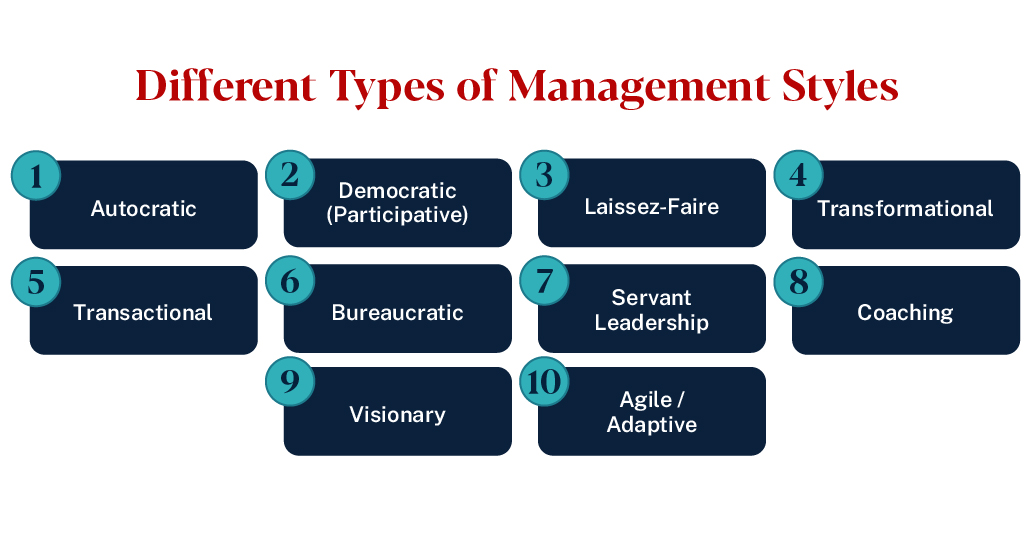
Let’s examine ten management styles that can help your team reach new heights.
1. Autocratic Management Style
Autocratic management styles are characterized by a top-down and centralized approach. The manager calls the shots. There’s a clear hierarchy, strict adherence to procedures and fast decision-making because only one person is making them.
This style excels in emergencies and with inexperienced teams who need structure. Additionally, there are often times when decisions need to be made quickly. The downside, however, is that it often kills creativity, reduces engagement and creates teams that can’t function without constant direction. High turnover is common when good people feel they are being micromanaged.
Autocratic styles work best in:
- Times of crisis
- Settings that have strict safety rules
- Training new workers who need clear direction
- Environments where mistakes can have serious consequences and high standards can’t be changed
2. Democratic (Participative) Management Style
Democratic management styles flip the script. Leaders actively seek input, encourage open communication and listen to diverse perspectives. This participative approach makes people feel valued. It also fosters a positive work environment where everyone’s voice is valued and heard.
The good news with this approach is you’ll often see more participation, new ideas and a stronger team. However, the process of making decisions takes longer as there are more opinions to consider. To keep conversations going, you’ll want to ensure you can facilitate and keep meetings on task.
Settings like creative industries, tech companies and consulting firms often leverage this approach. It works best with experienced teams capable of contributing real insights and when decisions genuinely benefit from multiple perspectives.
3. Laissez-Faire Management Style
Laissez-faire leadership gives teams maximum autonomy. Managers provide resources and step back. Employees decide how to accomplish goals with minimal supervision. It’s hands-off by design.
This approach inspires self-motivated professionals to be creative, but it can become disorganized quickly because there are no structures in place to hold people accountable. This can lead to junior team members not knowing what to do or projects slipping through the cracks.
Research labs, design studios and teams of senior developers are common industries where this method works well. It’s beneficial for creative agencies and new businesses that manage experts who don’t really need supervision.
4. Transformational Management Style
Transformational leadership motivates people by presenting them with a clear vision. Leaders question the status quo and push people to do better than they thought they could. They cultivate work environments where employees feel motivated and like they can make a difference.
Transformational leaders excel at driving change within organizations. They are open to new ideas and help teams look beyond their current challenges. This forward-thinking management style connects people’s daily tasks to organizational goals, making them feel like they are part of something bigger than themselves.
Think of founders who changed whole fields or business leaders who helped companies make big changes. This is a common style among successful startup founders and modern management practices that focus on new ideas.
5. Transactional Management Style
The transactional management style is based on a simple idea: You do your work and get paid for it. Data measures performance, bonuses and incentives. Employees set goals, know what to expect and anticipate the reward.
Everyone knows what they need to do, and there is a lot of short-term motivation. It’s useful for everyday tasks that yield clear results, but it can stifle creativity and encourage a transactional approach to thinking, rather than genuine engagement. This could affect retention.
Sales and finance companies that pay their employees on commission, as well as financial services that require strict compliance, often adopt this style. Essentially, it’s most effective for operations with processes that are easy to understand or workplaces where performance can be measured objectively, and rewards are directly linked to results.
6. Bureaucratic Management Style
Bureaucratic management means every action has a protocol. There are clear hierarchies, established procedures and standardized processes. Consistency is king, and predictability trumps innovation.
Standardization leads to consistency, compliance and fair treatment. However, it can also generate slow adaptation, lack of innovation and unhappy workers who see ways to make things better but are blocked by strict rules at every turn.
Government offices, hospitals, banks, big businesses and other types of companies are most suitable for this approach. Any industry where following the rules is crucial and making a mistake can have serious legal or safety consequences might benefit from leveraging bureaucracy.
7. Servant Leadership Style
The servant leadership style is grounded in leaders prioritizing the needs and growth of their team members. They resolve problems, provide people with tools and help them grow. Managing people is more important than managing tasks, and real care builds trust.
Servant leaders also prioritize active listening and understanding team concerns. They make people feel safe enough to take risks and be themselves. This fosters strong relationships and loyalty among people.
This approach also values the health and happiness of employees. Servant leaders help teams work better together and cultivate a culture that emphasizes and celebrates collaboration.
8. Coaching Management Style
Coaching management styles focus on helping individuals enhance their skills by providing them with feedback and offering ongoing mentorship. Managers get to know each person’s strengths and weaknesses so they can give them specific advice. Every problem is a chance to learn.
This method is ideal for training future leaders and strengthening the organization as a whole. Managing a team by helping them learn new skills makes them self-sufficient and enables continuous improvement. It works well for companies that want to hire from within.
Coaching makes teams stronger and happier, but it requires a significant amount of time and doesn’t yield immediate results. It’s not as useful in a crisis or with people who don’t want feedback.
9. Visionary Management Style
Visionary management styles inspire teams to work toward unified goals. Leaders set clear, motivating goals that make work meaningful, and they excel at explaining why work is important and how each person’s contributions matter.
Leaders who use this style motivate others through positivity and giving clear directions. They help teams see options that go beyond their current limits and get everyone working together. This kind of leadership helps motivate people and keep everyone on the same page, even when things are tough.
When an organization is going through a change, starting a new project or needing a reset, this approach shines. Specifically, it works well for startups that are figuring out what they want to do, established businesses moving into new markets or teams getting back on track after setbacks.
10. Agile/Adaptive Management Style
Agile management approaches originated in software development but are now applied in various areas of modern workplaces. This style emphasizes flexibility, focusing on progress in small steps and adapting quickly. Teams that work from different places and in changing work settings can benefit from this approach.
Agile managers put a lot of value on working together, being open and always getting better. They encourage their teams to break work into small, manageable chunks and offer regular feedback loops. Additionally, they make changes to the course based on results. Agile teams can respond quickly, are comfortable with change and are focused on delivering value.
This style is beneficial in spaces that need to urgently react to shifts in the market. It works especially well in industries that change quickly and where traditional planning can’t keep up.
Choosing the Right Management Style
Versatility is what makes a great manager stand out and lead a team effectively. The best leaders don’t adhere to a single management style but instead employ a range of management approaches.
When you pick your management style, ask yourself:
- How skilled and experienced is your team?
- Teams that are new need more structure. Professionals with experience tend to perform well when they have the freedom to do so. Observe and determine if your team can manage themselves and make informed choices independently.
- What approaches can help you reach goals and deadlines?
- Autocratic methods may be needed in times of crisis when problems need to be solved quickly. Democratic or laissez-faire styles that encourage creative thinking are good for innovation projects.
- What values does your organization prioritize?
- Your management style should match the culture of your workplace. Companies that value innovation require different leadership styles than those that prioritize efficiency and adherence to rules.
- Do some team members need different kinds of help?
- To be good at managing people, you often must change your style to fit each person. Some workers appreciate coaching, while others like clear directions or to be as free as possible.
To become a better manager, you need to learn how to be flexible and adjust styles as needed. This ability drives effective and strong leadership.
FAQs About Types of Management Styles
What is the most effective management style?
The best way to lead depends on your team, the circumstances and the context. Most successful managers employ elements of various styles.
Can managers employ multiple styles simultaneously?
Yes. Effective managers continually adapt their approach to meet changing needs.
How do management styles affect employee motivation?
Management styles can significantly affect employee motivation. Democratic and coaching styles typically enhance intrinsic motivation by allowing employees to participate in decision-making and facilitating their growth. Transactional styles use outside rewards as incentives. Autocratic methods might make self-motivated employees less interested in their work, but they are effective for individuals who prefer clear rules.
How do I know my management style?
Being aware of yourself is very important. Think about how you usually make choices, talk to people and solve problems. Ask your coworkers and team members for honest feedback on how you lead. Many companies offer tests to determine the type of manager you are. Consider seeking guidance from a coach or mentor to identify your default style and become more adaptable.
Ready to be an effective leader? American College of Education (ACE) offers fully online programs designed to equip you to make a difference in leadership.