Welcome to the ACE Alumni Spotlight, where we highlight our alumni and share their stories.
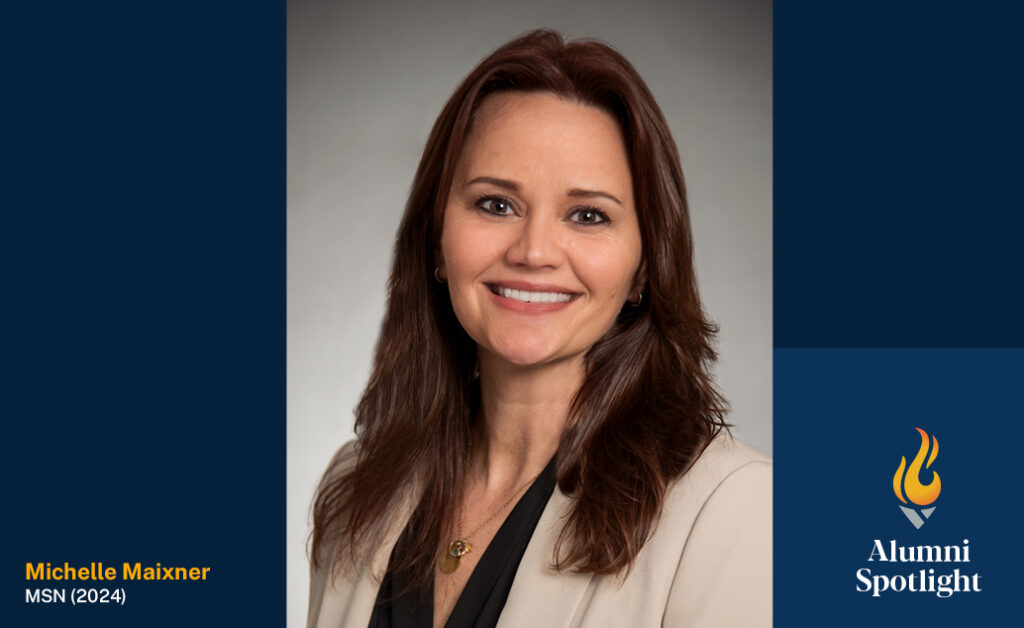
Michelle Maixner earned a Master of Science in Nursing (MSN) degree at American College of Education (ACE) in 2024 and serves as the manager of nursing education at Children’s Memorial Hermann Hospital (CMHH) in Houston. Her extensive experience in neonatal care and nursing education marks impactful contributions, including developing CMHH’s pediatric oncology program. We were delighted to learn more about her meaningful career.
ACE: You became the first manager of nursing education at CMHH while working toward your MSN at ACE. Tell us about the role and what led you to the position.
Michelle Maixner (MM): I spent 13 years as a pediatric nurse educator before stepping into nursing education management, and from day one, my goal has been to support the team, remove barriers and help great ideas come to life. There was, of course, a learning curve, but I’m three years in, and I truly love what I do.
I lead a team of talented and motivated nurse educators across CMHH and support education across the broader Memorial Hermann system. Some of my favorite moments are mentoring new educators and watching them grow into confident leaders themselves. My role also includes project management, system alignment and advocating for the needs of our department, but at the heart of it all is my passion for nursing education and the people who make it thrive.
ACE: How did you discover your interest in nursing education?
MM: After nursing school, I planned to become a nurse practitioner, but life led me to work in a neonatal intensive care unit, where I quickly realized how much I loved teaching parents how to care for their precious infants. Watching their confidence grow and seeing them become more engaged and empowered was incredibly meaningful.
My love of teaching naturally expanded into precepting new nurses and volunteering as a super user whenever there was an opportunity to help with staff training. Through those experiences, I realized I wasn’t just drawn to education but had a real passion for it (and maybe a little natural talent, which I like to think I inherited from my grandma).
ACE: How did choosing ACE to complete your MSN allow you to balance a new role, in addition to working in home health, while completing coursework?
MM: In full transparency, I was very nervous before starting my first course, having come from a traditional, in-person learning background. Online school — on top of a new leadership role and working in home health — felt like a big leap but, thankfully, the reality was much greater than the worry.
The coursework was manageable, with most classes following a similar rhythm for discussion posts and assignments. That consistency made it much easier to plan and set realistic expectations. The instructors were also incredibly supportive and understood that most of us were balancing work and real life.
I was also lucky to start the program alongside several colleagues, which gave me a built-in support system where we leaned on one another often. The program supported both my personal and professional growth with flexible learning formats and a workload that made balancing it all possible.
ACE: You played an integral role in developing and growing the pediatric oncology program at CMHH, building its relationship with a global leader in cancer care, the University of Texas MD Anderson Oncology Cancer Center. What was it like working on something so impactful?
MM: This is easily one of the proudest moments of my career. I was working as a bedside educator when I was invited to help build what would become our pediatric oncology program. Since the unit I supported would care for most of the inpatient pediatric oncology patients, I stepped into the role of helping facilitate planning meetings and guide the work forward.
I still remember our first meeting at MD Anderson with a passionate, visionary team. From there, I helped facilitate weekly interdisciplinary, multihospital meetings focused on bringing ideas, workflows and processes together in a way that made sense across organizations. The more we learned as a team, the more I learned as an educator, and that growth directly translated into how I supported the oncology education needs of both our inpatient and outpatient units.
The program was created to serve children who are underserved or don’t have the insurance support to receive care at MD Anderson. While it was meant to start small, I quickly learned the truth of “if you build it, they will come.” It has been incredibly rewarding to watch the program continue to grow knowing that I helped align the vision, build the foundation and support meaningful change. It’s something I’ll always be proud of.
ACE: How has your MSN supported your career growth?
MM: Earning my MSN added credibility that reflected the hard work, experience and commitment I’d already invested in my career.
Before I even finished the program, I saw the impact. My director shared that she could tell I was actively applying what I was learning based on how I showed up in meetings and the types of questions I was asking. She could see the additional layers of knowledge taking shape. Now, a few years post-graduation, I still find myself referencing concepts, frameworks and tools from the program in my day-to-day work.
The MSN program at ACE also gave me a better understanding of systems, processes and change management, areas that would have felt overwhelming or unfamiliar otherwise. It didn’t just help me advance but helped me think differently and lead more confidently.
ACE: What advice do you have for nurses aspiring to work in nursing education?
MM: My biggest piece of advice is this: All nurses are educators. It’s already part of the job as we teach patients, families, peers and new team members every day, so if you’re interested in nursing education, you’ve already taken the first step.
From there, it really is about putting yourself out there. You get out of it what you put into it. Volunteer to teach, say yes to opportunities to be a super user or help with campuswide rollouts, and precept new staff whenever you can. Teaching others is one of the best ways to truly master a skill. Getting involved in hospital councils and stepping into leadership roles also helps build visibility, confidence and influence.
Great educators are often great leaders who are trusted for their expertise, unbiased perspective and ability to support others through change. Being comfortable teaching groups, developing educational materials and having thoughtful (sometimes tough) conversations will make the transition into education feel much more natural. Going back to school helps tie all of those experiences together and gives structure to the tools you’ve been collecting throughout your career.
Being an American College of Education alumni has its perks. When you return as an alum for another program, you can save 5% off your tuition with the Alumni Continuing Education Grant.